MT Colectivo
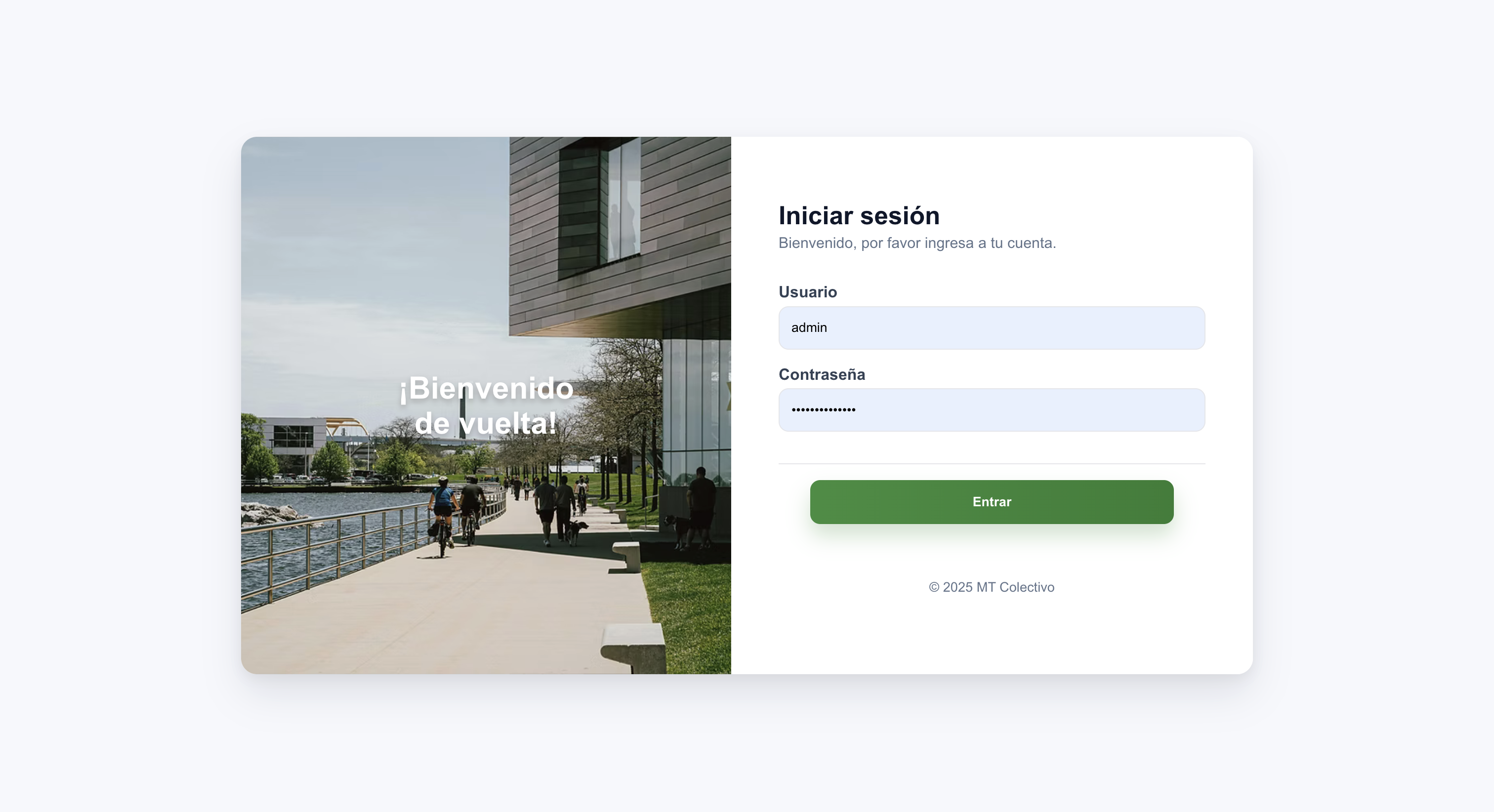
An internal operational tool built to automate service orders, reduce repetitive admin work and simplify how client requests were processed.
Context
MT Colectivo is a transportation company focused on school routes and private group trips across Guadalajara and nearby destinations.
The Problem
Service requests came through Google Forms, but every order still had to be reviewed manually, copied into Word, priced by hand and exported one by one as a PDF.
The Shift
The system automated that workflow by turning form submissions into structured service orders, calculating pricing automatically and generating editable PDFs from a standardized template.
The Value
It reduced repetitive admin work, removed manual formatting and made service order generation significantly faster for internal teams.
From request
to service order.
MT Colectivo was built around a simple operational flow: take incoming trip requests, structure them, price them and turn them into service orders without rebuilding documents manually.
Input
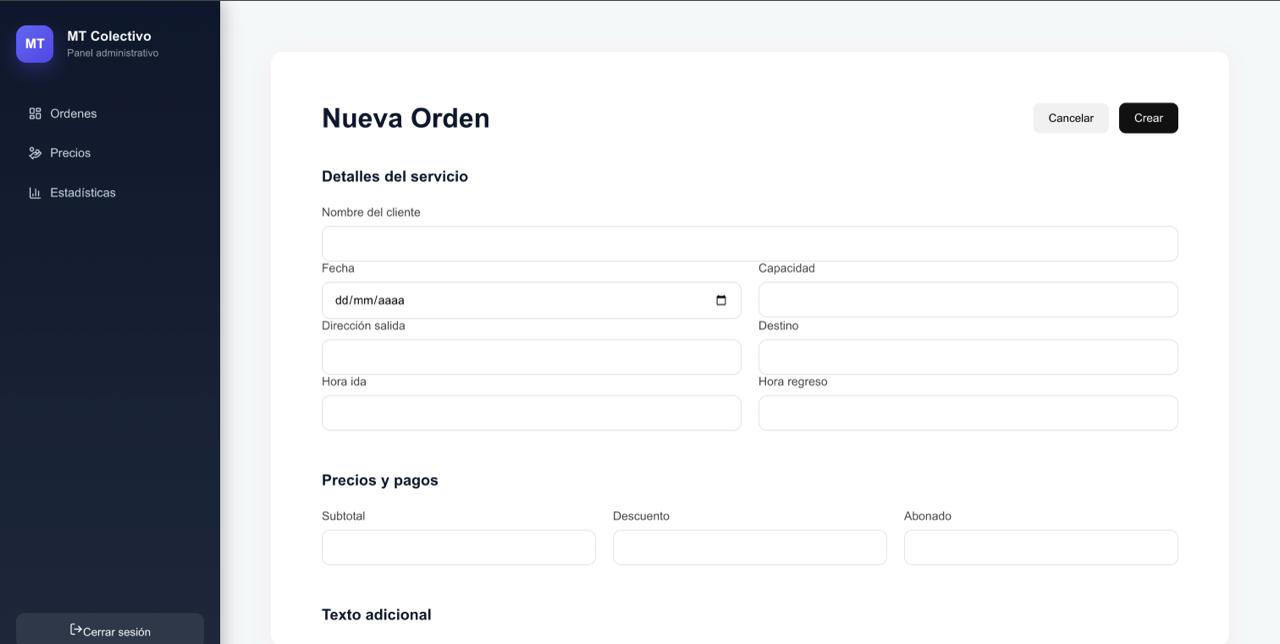
Clients submitted transportation requests through a Google Form with key trip details like destination, pickup point, passenger count and return date.
Pricing Logic
Requests were matched against dynamic pricing rules, allowing predefined routes and keywords to map automatically to pricing logic without recalculating every trip manually.
Output
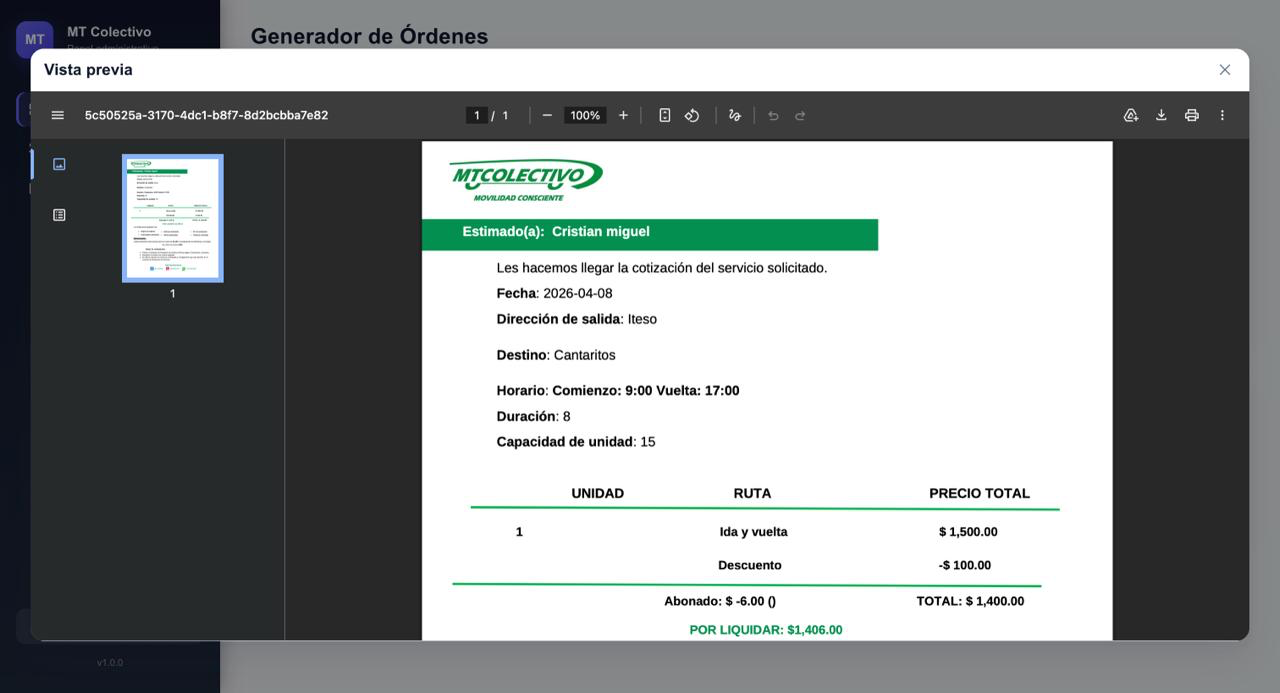
Once reviewed, the service order was rendered into a PDF in real time using the company’s existing template — fast to generate, easy to adjust and consistent every time.
Lightweight,
but structured.
MT Colectivo was built as a lightweight backend system focused on one operational workflow, using a simple stack designed for speed and reliability rather than scale.
Stack
The application was built with Vite on the frontend, FastAPI on the backend and SQLAlchemy as the ORM layer for managing service requests, pricing rules and operational data.
Ingestion
Client requests entered through Google Forms and were sent directly into the backend using Google Apps Script and a secured API key, allowing submissions to become structured records immediately.
Pricing Rules
Pricing logic lived in the database and was driven by dynamic route rules, allowing destinations and service keywords to map directly to predefined pricing without recalculating each order manually.
Document Pipeline
The original Word template was converted into a tokenized document using placeholders like {NAME} and {DATE}, then filled dynamically and rendered into PDF through headless LibreOffice running inside Docker.
MT Colectivo removed one of the most repetitive internal workflows in the business and turned it into a faster, more reliable operational process.
The biggest improvement was reducing manual administrative work. What previously required reviewing spreadsheets, rewriting service orders in Word, recalculating pricing and exporting PDFs by hand was reduced to a much faster and more consistent workflow.
The system fully removed the need to manually rebuild service orders. Internal teams no longer had to open spreadsheets, copy request data into templates, reformat documents or recreate PDFs every time a change was needed.
For me, the project reinforced something equally important: practical software is often about patience, adaptability and finding workable solutions under real operational constraints. The tokenized document approach and LibreOffice rendering workflow were both solutions I proposed to make the system reliable without forcing the business to change how it already operated.